Nike vs Adidas Running Shoes: The Best Models by Running Job
Nike vs Adidas is the wrong question until you know the job. This guide compares the closest running shoe matchups by use case, from first trainers to marathon racers.

Nike vs Adidas is the wrong question until you know the job. This guide compares the closest running shoe matchups by use case, from first trainers to marathon racers.

Nike vs Adidas is not just a shoe debate. It is a clean case study in how two brands sell performance, identity, belonging, and status in completely different ways.

Instagram does not give you a clean “hide my followers” switch. But you can still control who sees your follower list by making your account private, removing followers, blocking accounts, and tightening third-party access.

A UGC video in India costs anywhere from a few hundred rupees to ₹50,000 or more, and the observed middle for a standard 20-45 second creator video sits around ₹5,000-₹25,000. Agency packs with scripting and editing published in 2026 work out to ₹8,000-₹15,000 per video plus GST. The number that matters, though, is cost per finished ad you can actually run, which is what this post works through. I am writing this as EzUGC, which sells both an AI UGC tool and a done-for-you UGC agency, so I have a stake in how you read the last section. The ranges below come from published sources, and I say which ones.

Hire freelance creators when you need a few authentic videos and have someone in-house to brief and edit. Use AI UGC when you need lots of variations fast to find which hooks and angles work. Hire a UGC agency when you need steady volume plus strategy and nobody on your team has time to run it. Most brands spending real money on paid social end up mixing at least two of the three. That's the short answer. The longer one depends on five things: budget, how many ads you need a month, how fast you need them, how much control you want over every frame, and how much a real human face matters for your product. I'll go through each, with prices pulled from public pricing pages in October 2026.

Most UGC agencies charge somewhere between $100 and $400 per finished video, and full-service retainers usually start around $2,000 a month and climb from there depending on volume and how much strategy you hand over. The catch is that very few agencies publish a number at all, so the useful comparison is the cost of one finished, ready-to-run ad with scripts, editing and usage rights included. Below are the prices we could actually find on public pricing pages in October 2026, plus the math to compare them. I went looking for this because "how much do UGC agencies charge?" shows up in Google's People Also Ask box in the US, Canada and India, and almost none of the agencies ranking for "UGC agency" answer it. You get a "book a call" button and a free audit. inBeat's UGC agency page, for example, lists no prices, minimums or packages. Brighter Click's homepage offers a free 30-minute consultation and no rate card.

La bonne agence UGC dépend surtout du volume de publicités que vous voulez tester chaque mois. Au-delà d'une vingtaine de vidéos par mois, un forfait mensuel clé en main revient moins cher et vous fait gagner du temps. Pour quelques vidéos de temps en temps, une plateforme comme Moggo suffit souvent. Précision importante : ce comparatif a été rédigé par EzUGC, et nous nous y sommes inclus, en première position. Les informations sur les autres acteurs viennent de leurs propres sites, vérifiées en octobre 2026. Quand nous ne pouvions pas vérifier une information, nous l'avons retirée.

Die beste UGC Agentur hängt davon ab, wie viele Ads du im Monat testen willst und wie viel Arbeit du selbst übernehmen kannst. Wer 20 oder mehr Videos im Monat braucht, fährt mit einem Retainer am besten. Wer nur ab und zu ein paar Clips braucht, ist mit einer Plattform wie Speekly oder stylink UGC günstiger dran. Vorweg, damit es klar ist: Diese Liste hat EzUGC geschrieben, und wir stehen selbst drauf, ganz oben. Alle anderen Angaben stammen von den Websites der Anbieter, Stand Oktober 2026. Was wir nicht prüfen konnten, haben wir weggelassen.

For a UK brand that wants a steady stream of finished UGC ads, the shortlist is EzUGC if you need volume in several countries from one retainer, The UGC Agency if you want a London team running creator ads end to end, and Twirl or UGC3 if you would rather buy videos per creator in pounds. EzUGC wrote this list and put itself first. Weigh our section accordingly. I went through every agency and platform that shows up when you search "UGC agency UK" in October 2026, read their sites, and kept the ones that clearly sell UGC to brands and say enough about how they work to compare.

If you run a D2C brand in India and want finished UGC ads every month, the shortlist is EzUGC for 50 videos a month across AI and real creators in any Indian language, DigiStreet Media or The UGC Agency (Kolkata) if you want fixed INR packs, and What The Buzz if you want to buy per video from about ₹4,000. EzUGC wrote this list and ranked itself first, so read that section with your eyebrows up. Search "UGC agency India" and you get a strange mix: performance shops in Delhi NCR, influencer agencies with a UGC page bolted on, and a few companies that turn out to be based somewhere else entirely. I read each site in October 2026 and kept the ones that clearly sell UGC to Indian brands.

If you sell in Australia and want finished UGC ads every month without managing creators, the shortlist is EzUGC for volume across AI and real creators, Theory Crew or The Hype Society for a local full-service team, and Creator Flow if you would rather buy videos yourself in Australian dollars. EzUGC wrote this list and put itself first, so read our section with that in mind. Most of the agencies ranking for "UGC agency Australia" are in Melbourne. That matters less than you would think, and I explain why below.

The best UGC agency for most paid social teams in 2026 is one that ships finished, tested ads every month without you managing creators. If you want that done for you in any country, EzUGC is our pick (we wrote this list and we are on it). If you want a London team with deep European casting, look at The UGC Agency, and if you want a US agency that also runs your ad account, look at Brighter Click. Below are 10 options, split between real agencies and self-serve creator platforms.

The best AI video model is not always the one with the highest Elo score. This guide compares Seedance 2.5, Seedance 2.0 4K, Gemini Omni Flash, Kling, and HappyHorse for real production work.

Press and hold their avatar in the Stories row, tap Mute, and pick Story or Story and posts. Instagram does not tell them. Steps for Notes, unmuting and how mute compares with Restrict.

Locked out: Forgot password, then a login link or security code. Still in: change the password under Accounts Center, Password and security, and turn on two-factor authentication.

Profile, Menu, Login, Add account stores another Instagram login on your phone. You stay in one account at a time, and removing the shortcut does not delete the profile.

A private account makes people request to follow before they can see your lists. Public accounts on those lists can still show, and business profiles cannot go private.

190+ original funny Instagram captions sorted by situation, from selfies and coffee to Mondays and product drops, plus the current caption length and five-hashtag rules.

Use a 1200 x 900 px JPG or PNG under 5 MB for Google Business Profile posts. See which specs are official, which are recommended, and how crops work.

Forward counts right-side taps that move viewers to your next Story frame. Read it with Back, Next Story and Exited to see which frames hold attention.

Switch networks, force close, restart, update. If stories still will not load or upload, the fix is storage, permissions, cache or a reinstall. Symptom by symptom.

Eight documented misleading ad cases from the FTC and ASA, what each one cost, and a five-minute check to keep your own ads defensible.

A step-by-step way to find out why your Instagram reach is stuck and fix it, from eligibility checks to the watch time and send signals Instagram ranks on.

Most Seedance 2.5 prompt lists are adjectives. Cinematic. Hyper-detailed. 8K. Award-winning lighting. None of them show you the clip that came out. That's the only evidence that matters.

AI UGC uses avatars, voiceovers, and generative video tools to create content that looks like user-generated videos. It is faster and cheaper than hiring creators for every ad variant, but it should not be confused with real customer proof.

UGC ads work when they feel like a person talking, not a brand performing. This guide breaks down the full system: script structure, hook testing, creator briefs, AI UGC workflows, platform edits, measurement, and legal basics.

Every ad that is beating you on TikTok right now is public. TikTok's Creative Center ranks the top ads by country and industry, Meta's Ad Library shows every active ad a brand runs, and anything that has been live for two weeks is paying for itself. The information asymmetry you imagine between you and the brands outspending you barely exists. The gap is what happens after you find the ad. Most people watch it, screenshot the hook, and try to film something that looks similar. That rarely works, because the surface of an ad travels badly. What transfers is the structure underneath: the order of the beats, the timing of the hook, where the proof lands, how the close is phrased.

Facebook Business Manager lives at business.facebook.com. That URL has been Meta's business hub since 2014, surviving the rebrand to Meta Business Manager and the newer "business portfolio" language that Meta's own help docs now use. Log in with your personal Facebook profile and you are in. The confusion is real, though, because Meta ships three tools under one roof. Business Manager is the backend for permissions, ad accounts, and assets. Meta Business Suite (business.facebook.com/latest/home) is where most teams actually work day to day. Ads Manager (facebook.com/adsmanager) is where campaigns get built. Same login, three different rooms. This page maps all three, then walks through setup and the access errors that eat the most time.

AI UGC video makers are replacing slow creator shoots with faster avatar-led ad production. This guide ranks the top tools for 2026 by workflow fit, creative output, paid-social usefulness, and production speed.

Instagram does not treat .gif files like normal feed or Reel uploads. The clean workaround is simple: use GIPHY stickers for Stories, Reels, comments, and DMs, or convert your GIF into a short MP4 for feed posts and Reels.

Instagram navigation is the part of the funnel most brands ignore. This guide shows how to turn your profile, bio, highlights, stories, DMs, and shopping features into a cleaner path from ad click to conversion.

Meta Ad Library is useful, but it is not a creative system. This guide compares the best tools for saving inspiration, producing UGC ads, connecting creative to performance, and keeping Meta campaigns fed.

Most Instagram ads fail because they try to be pretty before they try to be clear. Direct response creative is a message sequence: land the problem, show the mechanism, prove it, then ask. This framework gives you repeatable structures for Reels, Stories, and feed, plus a worked example and a pre-launch handoff checklist for clean testing.

Most teams compare agencies vs AI like it’s a single switch. It isn’t. Strategy, production, editing, approvals, and media buying are different jobs with different failure modes.

Agencies don’t lose accounts because they lack features. They lose them because creative production gets messy: wrong assets, fuzzy approvals, unclear rights, and exports that break at the finish line. This guide shows how to evaluate Meta ad creative platforms as a full client-production system - including permissions, approvals, predictable outputs, and cost per approved ad.

Most AI ad tools look cheap until you count the stuff pricing pages ignore: failed generations, edit loops, and reviewer time. The only denominator that survives reality is approved, usable creative. This guide gives you a pricing framework you can apply to any vendor without memorizing a stale price table.

Most teams try to measure AI-generated ads with blended account metrics and end up arguing about “the algorithm” instead of the creative. This framework separates creative, media, and business effects, then uses a simple metric hierarchy to decide what to make next. It’s built for paid-social operators and agencies who need clean comparisons, not vibes.

Most teams think the hard part is prompting. It is not. The bottleneck is turning a real offer into a reviewable brief, generating the right components, and adapting them to each Instagram placement without breaking claims or brand.

Most “templates” are just decoration. Real Facebook ad creative templates freeze the structure - hook, claim, proof, shot plan - so you can swap one variable and learn fast.

Meta Ad Library is great for seeing what competitors are willing to pay to put in front of customers. It is not proof those ads worked. This guide gives you a repeatable workflow to sample, log, and convert public ads into original, testable creative briefs without copying.

Most teams treat paid-social creative like photos in a camera roll: scattered files, random names, and zero institutional memory. A real creative library is closer to an operating system - the place where approved assets, versions, rights, and learnings stay attached. This guide breaks down what to store, how to tag it, and how to evaluate software without accidentally buying a media-buying platform.

Most Meta creative “spec problems” are really pre-production problems. If your script, framing, and captions ignore overlays and crops, no export setting will save you. This is one consolidated reference for Facebook and Instagram feed, Reels, Stories, and common video placements - with a workflow that starts at storyboard, not at render.
Pick a beach caption that matches the photo, then add one true detail. 396 copy-paste beach captions sorted by photo type, activity, mood, and format, plus templates.

Wednesday 12-6 PM local time is the safest single slot for Reels in 2026. We compared Buffer, Sprout Social and Hootsuite data to show where they agree, where they conflict, and how to test your own best time.

Instagram Reels can be up to 20 minutes long in 2026, but Reels over 3 minutes are not recommended to new audiences. Here are all the limits, why your account may differ, and the best length for reach, teaching, and sales.

Most Stories don’t fail because the video is bad. They fail because the frame looks unfinished and the text is unreadable. Here’s how to add background color to an Instagram Story without covering your video - plus clean border and gradient options when you want more control.

Reposting Stories is easy when you’re tagged - and annoyingly manual when you’re not. This 2026 guide covers every real-world case, plus quality rules, a safe-zone cheat sheet, and the metrics that tell you if reposts drive clicks or just views.

Most paid-social teams do not have a creative-testing problem. They have a production problem. The media buyer can see that the account needs fresh angles. The brief sits in a doc, the creator is waiting on a product shipment, and the next batch gets pushed to next week. Then the team reacts to a tired ad instead of getting ahead of it.

Instagram still does not let you add a new photo to a carousel after it goes live. This guide explains what you can edit, when to delete and repost, and the safer fixes that preserve engagement.

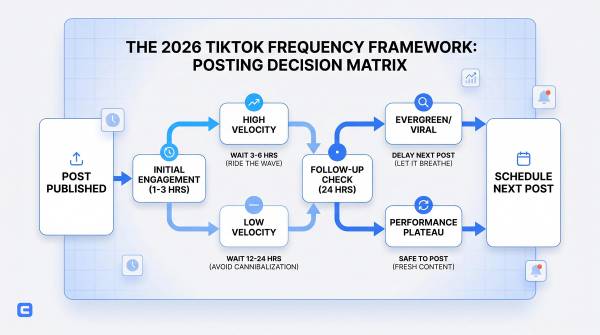
Most brands do not need to post five TikToks a day. The smarter move is spacing posts around engagement velocity so you do not interrupt a video that is already working.

You usually cannot edit the actual video or audio after a Reel is live. This guide shows what can still be changed, what is locked, and how marketers should fix mistakes without killing reach.

Instagram Stories often turn blurry after you add music because the app re-renders and compresses the video again. Here is the practical 2026 workflow: export at 1080x1920, 30 FPS, H.264, AAC, and 3.5 Mbps before uploading.

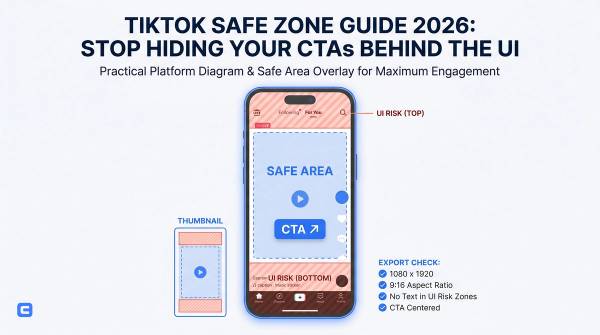
TikTok ads do not fail only because the hook is weak. Sometimes the offer is literally covered by the caption, share button, or music ticker. This guide shows the 2026 TikTok safe zone specs, the workflow to check ads before launch, and how AI UGC tools like EzUGC help teams ship compliant variants faster.

Pausing an Instagram ad is easy. Pausing it without nuking useful performance data is the part most marketers mess up. This guide shows when to pause, when to duplicate, and when to refresh the creative instead.

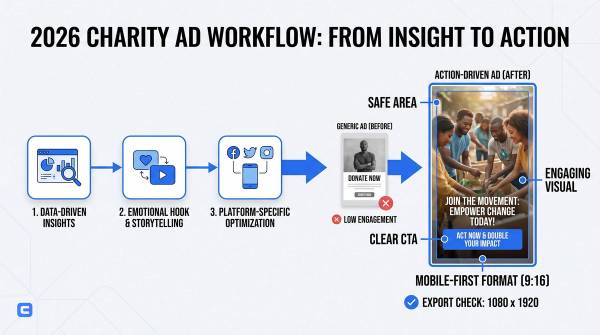
Most charity ads do not fail because people are heartless. They fail because the ad creates feeling, then gives the donor no clear job to do. This guide breaks down 20+ charity ad examples by the psychological lever they use: concrete impact, pattern interrupt, urgency, and hope.

Most HVAC Facebook ads fail because they sell the service before naming the problem. This guide breaks down 10 problem-first ad ideas, 2026 CPL benchmarks, and a 30-day launch plan for HVAC teams that need leads without burning budget.

Instagram Reel scheduling usually breaks for boring reasons: account type, file specs, expired tokens, or copyrighted audio. This guide shows how to fix the technical mess and build a content queue that does not collapse every Friday afternoon.

Most Shorts stuck at 0 views are not being rejected by viewers. They are never getting a real test. This guide breaks down the technical checks, retention targets, and upload habits that help YouTube classify and distribute your Shorts.

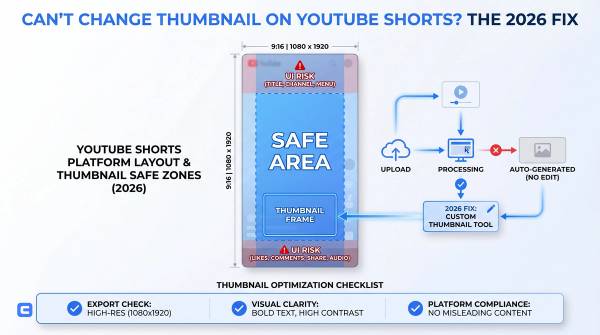
YouTube still does not let you upload a normal custom thumbnail for Shorts from desktop. The clean workaround is boring but effective: bake your thumbnail into the video, upload from mobile, and select that frame before publishing.

Instagram still does not give you one clean button to hide your followers from everyone. This guide explains the real workarounds in 2026: private accounts, removing followers, blocking, restricting, and cleaning up third-party access.

Small businesses do not lose paid social because they lack ambition. They lose because creative fatigue eats the budget before they can find enough winning ads. This guide breaks down the ad assist tools worth using in 2026, with EzUGC first for high-volume UGC video ads.

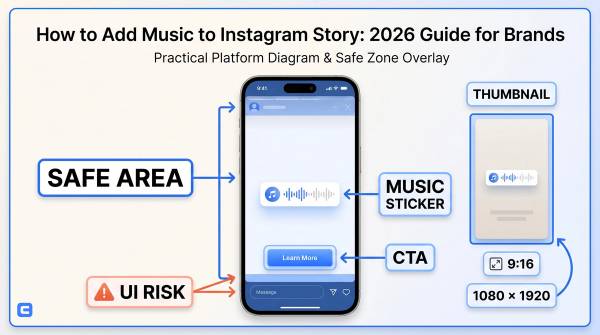
Instagram Story audio is not decoration anymore. This guide shows brands how to add music, use the Commercial Music Library, avoid copyright problems, and build Story ads that do not sound like an afterthought.

Most “free” AI ad generators are just demos with watermarks, export caps, or a sneaky credit-card gate. This list breaks down the real free tiers (credits, limits, and platforms) and where paying a tiny amount for UGC video ads can beat “free” outright.

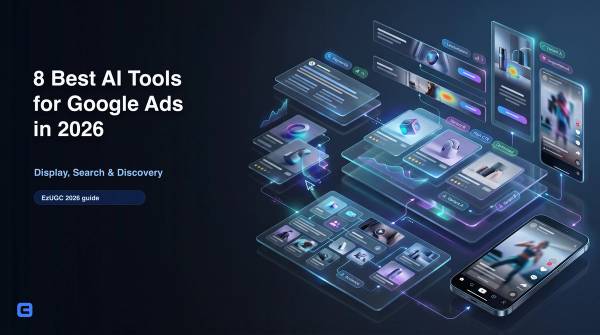
Google Ads got more automated. Weirdly, creative got more manual - because Performance Max wants a pile of assets across formats. This guide breaks down the best AI tools for Google Ads in 2026, with exact format requirements, pricing snapshots, and the real workflow tradeoffs (including where EzUGC is the simplest way to ship UGC-style video fast).

Most product ads fail for a boring reason: they are not built for one job in one funnel stage. This guide breaks down product advertisement types, strategies, channels, and measurement - plus how to produce more winning ad variants faster with AI UGC.

A brand-new model, HappyHorse-1.0, jumped to #1 on Artificial Analysis with no public team and no public API. This post separates the hard signals (blind Elo wins) from the soft stuff (architecture claims, “coming soon” links) so you can make sane build decisions.

A free AI video tool can look great until export. This list is organized around the part that actually matters: clean files, 1080p, and whether the workflow still feels sane after the first demo.

A practical guide to making UGC that converts in 2026, from audience research and hook writing to DIY production, AI workflows, and ad testing.

How AI lip sync works, how to avoid robotic output, and why multilingual UGC ads get easier when localization stays in one workflow.

InVideo is broader and easier to shortlist. EzUGC is the better fit for Shopify teams that need product demos, UGC-style ads, and weekly testing velocity.

Facebook ads don’t fail because you “need better targeting.” They fail because your creative is stale. Here’s how to generate high-converting Facebook ads in minutes using AI - without paying ~$200 per UGC video.

Instagram does not show which accounts watched your Reel. You get views, unique viewers, watch time, and a follower split. Here is what each number means in 2026, who you can identify, and the Story workaround that names some of your viewers.

Instagram Stories last 24 hours per frame, but video clip limits can make it feel like they “ended early.” Here’s the clean breakdown, plus how Highlights and Story ads change the timeline.

Instagram still won’t tell you who unfollowed you. This guide shows safe manual checks, the official data-download method, which tools are low-risk vs. risky, and how to turn unfollows into better content.

“1K followers in 5 minutes” is how you torch your reach. This 2026 playbook shows a realistic 7-day sprint using Reels, collabs, DMs, Broadcast Channels, and a small $5-$25 boost to speed up what’s already working.

Seedance 2.0 is built for people who want to direct AI video, not gamble on it. This guide breaks down the @ reference system, prompt patterns, and real workflows for consistent, cinematic results.

Hiring real UGC creators is slow and expensive. These AI UGC tools crank out ad variants in minutes for $2-20 per video - so you can test 50 hooks before lunch and let the algorithm pick winners.

Brands want UGC because it sells - it looks real, performs better, and costs less than traditional production. Here are 40 brands looking for UGC creators, plus pitching tips and content angles that actually get replies.

Influencer marketing isn’t peaking - it’s professionalizing. Here are 4 trends that will shape 2026 and beyond, and what smart brands should do about them.

A fast, repeatable AI UGC production workflow that turns briefs into Meta/TikTok-ready ads in days, not weeks—without adding headcount or creating approval...

A simple, repeatable AI UGC testing framework that helps Meta and TikTok teams ship more creative in less time, keep tests apples-to-apples, and find...

If your Meta/TikTok creative pipeline is bottlenecked by filming, shipping, and revisions, an AI UGC video generator can compress days into hours. Here’s...

If your ads stall, it’s usually not the edit - it’s the script. Here are AI UGC script structures and examples built for fast testing on Meta and TikTok,...

A swipeable set of AI UGC examples for Meta and TikTok—plus how to structure hooks and how many variants to test per concept so you can move from idea to...

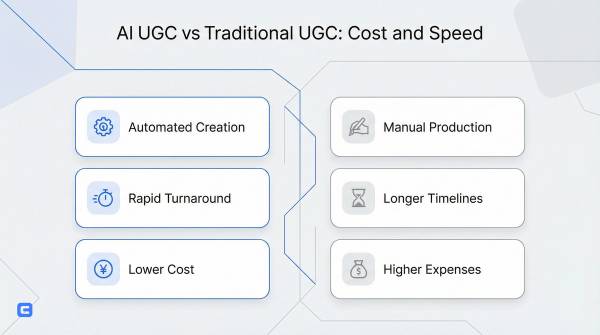
If you’re buying on Meta or TikTok, creative velocity is the game. Here’s how AI UGC and traditional creator-led UGC differ on cost, speed, and what to...

A step-by-step playbook to create AI UGC ads fast - hooks, scripts, AI creator videos, edits, and a launch-ready checklist for Meta and TikTok.

MicMonster is a free text-to-speech tool with 500 voices across 138 languages (including Hindi). If you’re making cartoon channels or voice-over content, it’s a quick way to get clean narration - and if you need the full ad video, you can pair it with EzUGC to generate UGC-style creatives in minutes.

AdCreative.ai spits out static ad creatives and assigns a 0-100 score that’s directionally right 75-80% of the time. It can save 80% of production time, but 80% of outputs still need manual tweaks - and there’s no native video.

AdCreative.ai is solid for static creatives, but it breaks down where modern performance marketing lives: video. Here are 12 alternatives worth testing - starting with EzUGC, which makes realistic AI UGC video ads for about $5/video in minutes.

Invideo uses a credit-based pricing model with four tiers: Plus, Max, Generative, and Team. Here’s what each plan includes - and how to think about picking the right one.

InVideo is solid, but it’s not the only way to ship social videos fast. Here are the best InVideo alternatives in 2025 - with EzUGC as the #1 pick if you want UGC-style ads at ~$5/video instead of ~$200/video.

Most “UGC flywheels” are just funnels drawn in a circle. A real UGC content flywheel compounds because each round produces an output that becomes a cheaper input next time. The trick is realizing the compounding asset isn’t the videos - it’s the customer language you capture from the winners and feed back into your next briefs.

Spark Ads let you run ads through real TikTok posts - keeping the likes, comments, and creator vibe that makes TikTok work. Here’s how they work, what they cost, and how to use them without getting stuck waiting on creators.

Your Meta winner isn’t failing on TikTok because it’s 9:16. It’s failing because TikTok has a grammar and your ad has an accent. This post writes the “native” conventions down as nine creative codes you can score 0/1 before you launch - plus when to break the codes on purpose.

Whitelisted UGC campaigns usually don’t die because of creative fatigue. They die because one permission quietly expired, got revoked, or the post changed after launch. This is the operational plumbing: who generates what, which IDs get exchanged, what expires, what breaks silently, and how to keep creator-handle ads serving on Meta and TikTok.

TikTok is where products get discovered, not just entertained. This guide covers account setup, content strategy, ads, analytics, and brand examples - with a pragmatic way to produce more UGC-style creatives without paying $200 per video.

AI lip-sync makes a face speak new audio - convincingly, fast, and at scale. Here’s how it works, why marketers care, and how to create lip-synced UGC-style ads in minutes.

Supawork AI is fine if you only need basic avatar/image tooling. But if you’re trying to ship ad creatives fast, the feature gaps show up fast. Here’s a feature-by-feature comparison - with EzUGC as the practical pick for performance teams.

Static content is dead. AI-powered video is the new king. Here’s how EzUGC and hybrid strategies are reshaping brand storytelling with animation, data, and brutal speed.

Facebook calls everyone a 'digital creator' now, but what does that actually mean? Here’s the real story—what creators do, why it matters, and how AI is rewriting the rules.

LTX Studio lets anyone create animated videos from a prompt in minutes. But how does it stack up to the $5 UGC videos made with EzUGC? Here’s the hands-on breakdown, step-by-step.

Supawork AI memang populer, tapi tidak semua fiturnya gratis, dan beberapa bahkan kalah telak dari pesaing. Lihat perbandingan jujur: fitur, harga, hingga AI avatar—plus kenapa EzUGC layak jadi pertimbangan utama untuk UGC video.

OpenAI and Anthropic drop rival coding agents at the same hour-plus Super Bowl ads. See what changed and who’s winning. Read now.

GPT-5.3 Codex boosts reliability with new benchmarks and faster inference. See features, scores, and a migration guide-read now.

Tested 6 Synthesia alternatives for scalable AI training videos. See which tools show real product workflows and stay updated-read the picks.

Captions AI acting up? Compare 7 top alternatives for captions, clipping, and editing in 2026-find the best AI content tool and try one today.

HeyGen vs Synthesia in 2026-see pricing, features, and best use cases. Find the right AI avatar video tool for your team-read now.

Arcads AI vs Creatify AI-see which wins on realism vs ROAS analytics. Compare features, pricing, and use cases, then pick your ad stack.

Creatify not cutting it? Compare 17+ fast AI ad generators for 2026-better pricing, easier workflows, ad-ready output. Pick your tool now.

Is Synthesia worth $4B? See real testing, Express-2 avatars, and Video Agents. Get the pros, cons, and best use cases-read now.

HeyGen’s “unlimited” plan has limits. See real pricing, Avatar IV caps, and faster render costs-read before you subscribe.

Compare MakeUGC AI features, pricing, and top alternatives for faster UGC ads. Cut costs and test more variants-read the 2026 guide.

Arcads AI review 2026: generate UGC-style video ads fast. See features, pricing, pros/cons, and better alternatives-read before you buy.

Creatify AI vs rivals for fast UGC ads in 2026-see strengths, pricing limits, and best alternatives. Compare tools and pick yours now.

Stop guesswork: use a 5-part UGC campaign framework to find trends, brief creators, test fast, and optimize. Get the checklist and run it.

Need better product photos fast? Compare top AI image generators for ecommerce and learn prompt tips-pick a tool and start creating today.

Pinterest is a visual search engine with buyer intent. Learn setup, what to post, keywords, and ROI tracking-start driving sales today.

Skincare is crowded. Learn skin care branding that stands out fast-packaging, strategy, and niche. Get tips to build a recognizable brand.

Stop the scroll in 3 seconds. Steal these best-performing UGC hooks for video ads and test faster-use the list and improve conversions today.

Stop random ad tests. Use a creative testing roadmap to run clean experiments, learn faster, and scale winners-get the practical steps inside.

Make influencer content perform like paid ads. Learn social media whitelisting, permissions, and targeting-start scaling creator ads today.

Partnership Ads or Spark Ads? Learn key differences, pros, and when to use each to scale creator-led ads. Read the guide and test both.

Using UGC without permission can trigger lawsuits. Learn how to secure UGC usage rights, document consent, and stay compliant-use this checklist.

UGC rates vary fast in 2026-see real benchmarks and the pricing levers (licensing, allowlisting). Get a budget baseline and plan your spend.

Need authentic ads fast? Learn how to find UGC creators, vet brand fit, and scale partnerships. Get the checklist and start sourcing today.

Ready to sell on TikTok Shop? Learn eligibility, setup, and growth tips to launch fast. Follow this guide and start selling today.

Wondering who watched your TikTok? In 2026, TikTok doesn’t show video viewers-see what you can track instead. Learn the details now.

What is a digital creator on Facebook? Learn what it means, how to find creators, and how to become one-start growing your reach today.

See 26 big brands using micro influencers to drive trust and sales. Steal the playbook and start your creator pipeline with EzUGC.

Skip Amazon’s noise with curated picks. Learn how to find Amazon Influencer Storefronts in minutes-start browsing trusted recommendations now.

UGC creator or influencer? Learn the 4 key differences, costs, and best use cases-so you spend smarter. Compare them now.

Find the best Gen Z influencers for your next collab-by niche and followers. Shortlist fast and start outreach today.

Instagram vs TikTok-see who you reach, what formats win, and how ads scale. Get the key differences and pick the right platform now.

Want more photos in one Story? Learn 3 quick ways to make an Instagram Story collage-built-in tools or apps. Try it now.

Need authentic ads that don’t feel like commercials? See 15 UGC video examples by type-steal these formats for your next creatives.

Want TikTok fame that converts? Learn 7 essential steps to earn repeatable reach and grow followers-start applying these tips today.

TikTok influencer rates vary fast-avoid overpaying. Learn what creators charge, what brands pay, and get a smarter pricing checklist.

Gen Z hates ads but rewards authenticity. See stats, tactics, and examples to win their feed-plus a fast UGC shortcut. Read now.

UGC ads boost trust, CTR, and conversions. Learn what they are, top formats, and how to scale them-plus examples. Get the playbook.